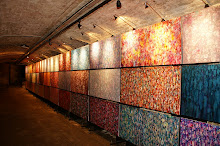
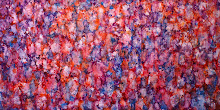
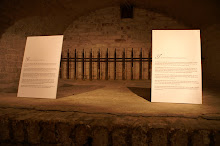
The pilgrims look up at the magnificent temple, full of hope. You tell them how to make sacrifices to Aesclepius, son of Apollo. Later you will let them bathe in the holy waters before spending the night in the temple where serpents move freely, bringing augural dreams.
Set in a wide valley in the southern alps at the junction of two rivers, Reii Appollinaires is known far and wide for its healing powers. Its reputation has made your town rich. But the uplands have been deforested to build the magnificent town and heat its baths, and soil has started to wash off the hills.
No one thought the holy waters might be the town’s undoing. But their steady tide of alluvial silt was lifting the level of the plane, burying the buildings. Your descendants built a cathedral ontop of the temple. Its bishops had great influence. But the tide from the hills was relentless. By the middle ages the town abandoned the site and tried to rebuild on higher ground it was too late, Riez’s glory days were done.
All that remains of your magnificent town today are four slender temple columns and a sleepy village surrounded by fields of lavender.
Monday, 22 February 2010
Tuesday, 9 February 2010
Madagascar
It is 1896. You keep watch while your father hunts. If you see the French coming through the forest you are to make the special call. You hold your breath, listening.
Deep thuds make a bass note to the usual forest sounds. It is the steady pounding of axes as the French clear the forest.
Your father has heard their plans. In the Central Highlands they will grow rice; in the north cloves, vanilla and sugar; and in the west rice, maize and cattle. Here, where you live, they will clear the ancient forests to plant lucrative coffee, the crop that causes the most erosion because it leaves the soil unprotected.
This is how they will harness Madagascar’s precious land, the complex ecosystems which evolved in isolation over one hundred and sixty five million years to produce unique plants and animals. Rare orchids and lemurs, spiny forests and hundreds of species of frogs; all of Madagascar’s riches will give way to the needs of Europe’s hungry population.
Families like yours will be forced onto marginal lands, causing yet more damage to the island. In just over a century, two thirds of your people will live in abject poverty as Madagascar’s red soil bleeds out into the sea.
Deep thuds make a bass note to the usual forest sounds. It is the steady pounding of axes as the French clear the forest.
Your father has heard their plans. In the Central Highlands they will grow rice; in the north cloves, vanilla and sugar; and in the west rice, maize and cattle. Here, where you live, they will clear the ancient forests to plant lucrative coffee, the crop that causes the most erosion because it leaves the soil unprotected.
This is how they will harness Madagascar’s precious land, the complex ecosystems which evolved in isolation over one hundred and sixty five million years to produce unique plants and animals. Rare orchids and lemurs, spiny forests and hundreds of species of frogs; all of Madagascar’s riches will give way to the needs of Europe’s hungry population.
Families like yours will be forced onto marginal lands, causing yet more damage to the island. In just over a century, two thirds of your people will live in abject poverty as Madagascar’s red soil bleeds out into the sea.

Monday, 8 February 2010
The decline of Bruges
‘Things will work out. Don’t worry.’
What would she have you do, run to England like her brothers? Give up this life you’ve worked so hard to build?
The cloth you weave is renowned around the world. Traders come from as far as Russia and the Middle East. Your Flemish tradition of craftsmanship started in Roman times. The population was high, even then, and farmers had to supplement their income with weaving. That’s how you Flemish are; you solve problems.
When silt first started to block the Zwin estuary, you built out-ports nearer the sea. In the thirteenth century, when local timber ran out, you organised imports. Look at Bruges now, this city of 200,000 is amongst the richest in the world; home to the royal court, famous artists, even that Englishman Caxton, printing his books.
It’s true; the out-ports are silted now, and farmers have moved their cattle off the exhausted land onto the coastal dunes, defying the ancient charters.
Rumours circulate that Antwerp will take your trade. ‘Our days are numbered,’ they say, but you ignore them. You cannot imagine that in a few generations your city will be the poorest in Belgium. Abandoned, practically deserted. It seems impossible; Bruges always pulls through.
What would she have you do, run to England like her brothers? Give up this life you’ve worked so hard to build?
The cloth you weave is renowned around the world. Traders come from as far as Russia and the Middle East. Your Flemish tradition of craftsmanship started in Roman times. The population was high, even then, and farmers had to supplement their income with weaving. That’s how you Flemish are; you solve problems.
When silt first started to block the Zwin estuary, you built out-ports nearer the sea. In the thirteenth century, when local timber ran out, you organised imports. Look at Bruges now, this city of 200,000 is amongst the richest in the world; home to the royal court, famous artists, even that Englishman Caxton, printing his books.
It’s true; the out-ports are silted now, and farmers have moved their cattle off the exhausted land onto the coastal dunes, defying the ancient charters.
Rumours circulate that Antwerp will take your trade. ‘Our days are numbered,’ they say, but you ignore them. You cannot imagine that in a few generations your city will be the poorest in Belgium. Abandoned, practically deserted. It seems impossible; Bruges always pulls through.
Subscribe to:
Posts (Atom)